Return Policy for Custom Printed Clothing: What to Know
Table of Contents
- Why Custom Printed Clothing Returns Work Differently
- When Personalized Clothing Returns Are Actually Accepted
- How to Report a Problem: A Step-by-Step Claim Guide
- Damaged Custom Clothing Replacement vs. Refund vs. Store Credit
- What a Custom Clothing Refund Policy Should Spell Out
- Build a Custom Apparel Return Policy Template That Prevents Disputes
- How to Prevent Return Disputes Before You Order
- Conclusion
- Frequently Asked Questions
Last Updated: October 17, 2026
Why Custom Printed Clothing Returns Work Differently
Most shoppers assume a return policy for custom printed clothing works like any other online purchase. The custom T-shirt printing market reached USD 9.88 billion in 2026, according to Research and Markets' Custom T-Shirt Printing Market Report 2026, and that growth runs on made-to-order production. At Change Your Life Apparel, we build every personalized item only after someone orders it, which changes what a return can realistically mean.
Made-to-Order Means Made for You
A made-to-order item is produced after you order it, using your design, photo, or text. It cannot go back on a shelf.
This is not a loophole. It is the economics of one-of-a-kind products.
The practical result: your order needs to be right the first time, and the seller needs a fair process for genuine production errors.
The Three Kinds of Problems That Decide Everything
Not every complaint is the same, and mixing them up is the fastest way to a denied claim.
- Printing defects: the decoration is crooked, faded, peeling, or the wrong color.
- Garment defects: the shirt itself has a hole, a broken seam, or a stain.
- Customer-side issues: you approved a design, picked the wrong size, or changed your mind.
The first two are the seller's responsibility. The third usually is not. Keep that split in mind for everything that follows.
When Personalized Clothing Returns Are Actually Accepted
Personalized clothing returns are accepted when the item arrives misprinted, defective, or damaged. They are generally not accepted for sizing errors, approved artwork, or a change of mind.
The Custom T-Shirt Co. offers a 20-day window for exchange or store credit, while Fast Times' refund policy excludes returns and exchanges except for misprinted merchandise.
Misprints, Defects, and Damage: The Valid Claim
A valid claim means the product does not match what was confirmed. That covers:
- The print is placed wrong, sized wrong, or the wrong color.
- The decoration peels, cracks, or washes out on first care.
- The garment has a manufacturing flaw.
Photo evidence decides these cases fast. Take clear shots in daylight, showing the whole item and a close-up of the fault.
What Usually Is Not Covered
Change of mind, wrong size selected, typos you approved, and low-contrast artwork you signed off on all fall outside a typical policy.
That sounds harsh until you look at the numbers. Apparel return rates sit at 20-30%, with some fashion segments hitting 50%, per Ringly.io's 2026 ecommerce return statistics. Custom sellers cannot absorb that on products nobody else can buy.
How to Report a Problem: A Step-by-Step Claim Guide
Reporting a problem takes five steps: check your window, classify the fault, gather evidence, contact customer service in writing, and request a specific remedy. Do it in that order and most claims resolve in one or two messages. The step most buyers skip is classification, and it is the one that decides whether the claim is valid.
Step 1: Check your return window
Policies vary widely. Some allow 14 days from delivery, others 20 or 30. Count calendar days from the date received, not the order date. If the policy does not state whether the clock starts at order or delivery, ask before you order, that single detail decides whether a late claim is even considered.
Step 2: Classify the fault before you write anything
Use this decision path. It is the fastest way to know whether you have a claim at all.
- Does the item differ from the approved proof? If the print is placed wrong, sized wrong, the wrong color, or the wrong item arrived, that is a printing defect, a valid claim.
- Is the garment itself flawed? A hole, broken seam, stain, or shrinkage beyond the stated spec is a garment defect, a valid claim.
- Did the decoration fail after normal care? Peeling, cracking, or washing out on the first wash per the care label is a valid defect claim; damage from bleach, high heat, or ironing directly on the print usually is not.
If you land in the first three buckets, continue. If you land in the fourth, contact customer service anyway, some sellers offer a courtesy remake or discount, but set expectations accordingly.
Step 3: Photograph the issue
Use daylight. Shoot the full item flat, then a close-up of the fault, then a shot of the care label or packaging if relevant. Three to five clear photos is the practical standard. Sellers who ask for photos are not stalling; they need to distinguish a production error from normal wear or a customer-side mistake.
Step 4: Contact customer service in writing
Email keeps a record. State the problem in one line, attach photos, and give your order number and date received. A complete claim removes every reason to say no:
- Order number and date received
- A one-sentence description of the fault
- Three to five clear photos
Step 5: Ask for a specific outcome
Say whether you want a replacement, a refund, or store credit. Vagueness slows everything down. If the policy gives the seller discretion over the remedy, name your preference and the reason, for example, a replacement if you still need the item, a refund if the event has passed.
What to do if a valid claim is denied
Denials happen, and some are wrong. If you believe the fault is a genuine defect and the seller disagrees:
- Ask for the denial in writing and the specific policy clause relied on.
- Reply once with a calm, evidence-based summary, restate the classification, attach the photos again, and reference the policy language.
- Escalate within the company to a supervisor or the address listed for complaints, if one exists.
- Use your payment provider's dispute process if the seller will not engage. Card networks and platforms like PayPal have their own timelines, so keep every email and photo.
- Note that store policies do not override applicable consumer protection law in your jurisdiction. This guide is not legal advice; if the amount is significant, a local consumer protection agency can explain your options.
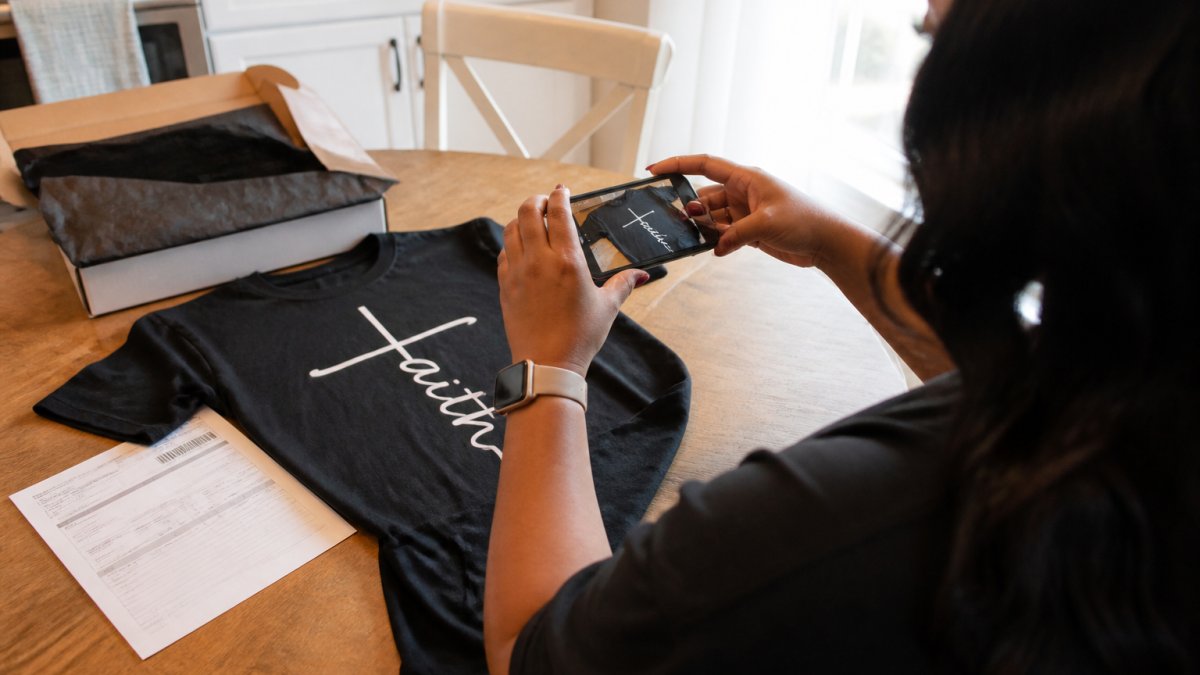
Damaged Custom Clothing Replacement vs. Refund vs. Store Credit
Damaged custom clothing replacement is usually the fastest remedy, refunds are typically reserved for cases a replacement cannot fix, and store credit is the most common middle ground. Which one you get depends on the seller's policy and the type of fault.
Here is how the three compare in practice:
| Remedy | Typical Trigger | Speed | Best For |
|---|---|---|---|
| Replacement | Misprint, damage, wrong item | Medium | Getting the product you ordered |
| Refund | Fault the seller cannot remake | Slowest | Orders you no longer want |
| Store credit | Minor faults or policy default | Fastest | Repeat buyers |
Ask which one the policy offers before you send photos. It saves a round of emails.
What a Custom Clothing Refund Policy Should Spell Out
A custom clothing refund policy should state the return window, what counts as a defect, the evidence required, the remedies available, who pays return shipping, and how disputes are escalated. If any of those is missing, ask before you order. The checklist below turns that into a comparison you can run against two or three sellers in ten minutes.
The seven-point policy checklist
- Return window length, and whether it runs from order or delivery. A 30-day window from order can be shorter in practice than a 14-day window from delivery.
- Clear definitions of misprint, defect, and damage. Vague language like "quality issues" gives the seller room to deny.
- Photo and order-number requirements. Know what evidence you will need before something goes wrong.
How to compare two policies side by side
Write the answers in a simple grid: window, defect definition, evidence, remedy, shipping, fees, escalation. The seller with the clearest answers is usually the safer order, even if the window is shorter. A 14-day window with a defined defect standard beats a 30-day window that leaves "defect" undefined.
What to do when a policy is silent
Silence is not permission. If the policy does not address a scenario, say, a print that fails after three washes, ask customer service in writing before you order and keep the reply. A written answer from the seller is stronger evidence than your memory of a phone call.
Consumer rights: a qualified note
Store policies set the seller's process, but they do not automatically override consumer protection law where you live. Many jurisdictions give buyers rights for goods that are faulty or not as described, and a "final sale" label does not always extinguish those rights. This guide is general information, not legal advice. If a dispute involves a significant amount, a local consumer protection agency can explain the rules that apply to you.
Build a Custom Apparel Return Policy Template That Prevents Disputes
A custom apparel return policy template works when it answers the customer's question before they ask it. Ours would read like this:
Returns and Remakes Personalized items are made to order and are final sale, except where the item arrives misprinted, defective, or damaged. Report any problem within 14 calendar days of delivery. Email your order number and clear photos of the fault to our team. Valid claims receive a replacement, refund, or store credit at our discretion. We cover return shipping on approved defect claims. Sizing errors, approved artwork, and change of mind are not covered. Please check the size chart and approve your proof carefully.
That template covers the eight things every policy needs: window, defect definition, evidence, remedy, shipping, exclusions, approval step, and contact route.
How to Prevent Return Disputes Before You Order
Prevention beats any claim process. Four habits eliminate most disputes before they start.
Check the size chart, not your usual size. Print-on-demand blanks can run differently from retail brands.
Approve your proof at full zoom. Read every word aloud.
Use high-resolution artwork. Low-quality images print soft.
Do those four things and the odds of needing a claim drop sharply.
Conclusion
The gap between a smooth custom order and a frustrating one usually comes down to preparation, not luck. Check the size chart, approve your proof at full zoom, and know the return window before you buy. At Change Your Life Apparel, every item is customizable with your own design, photo, or text, and we stand behind the quality of what we make.
Frequently Asked Questions
Can I return custom printed clothing if I opened the package?
Opening the package does not void your options. What matters is whether the item is defective, misprinted, or damaged, not whether the bag is sealed. If there is a printing error, a garment fault, or transit damage, report it with photos and your order number inside the seller's return window. If the item is simply the wrong size or you changed your mind, most custom printed clothing sellers treat the order as final sale, so check the policy before ordering.
What should a return policy for custom printed clothing include?
A clear policy states the claim window in calendar days from the date received, defines what counts as a defect versus a customer-approved design or size choice, lists the proof required (photos, order number, description of the issue), and explains the remedy: replacement, refund, or store credit. It should also cover order cancellation cutoffs, return authorization steps, who pays return shipping, and whether a restocking fee applies. Vague policies are the main source of disputes.
How long do I have to report a problem with a custom apparel order?
Windows vary by seller. Published policies in the custom apparel space range from as short as 14 days to around 20 days from delivery for exchanges, store credit, or defect claims. Because custom clothing is often made to order, deadlines tend to be tighter than standard retail. Open and inspect your order the day it arrives, photograph any issue immediately, and submit your claim with your order number before the window closes.
Can I get a refund on a bespoke or personalized item?
Refunds on personalized items usually depend on the reason. If the seller misprinted the design, shipped the wrong item, or the garment arrived damaged, a refund or replacement is typically available. If the artwork or size was approved by you and produced correctly, the order is generally non-returnable because it cannot be resold. Read the custom clothing refund policy before you approve your proof so you know which situation applies.


Comments
Post a Comment